
Dario Amodei, Sam Altman, Elon Musk and Demis Hassabis are converging on the idea of “pacing the frontier.” For AI investors, the question is no longer whether safety matters—but whether slowing frontier model development also means slowing the infrastructure cycle.


Over one weekend, the AI investment debate changed.
Anthropic CEO Dario Amodei called for the industry to slow the pace at which frontier AI capabilities improve. OpenAI CEO Sam Altman publicly agreed with the broad direction. Elon Musk responded simply: “Dario is right.” Google DeepMind CEO Demis Hassabis also said the direction was broadly correct.
For investors heavily exposed to GPUs, HBM, networking, data centers and power infrastructure, the immediate reaction is understandable:
If the leading AI companies themselves want to slow AI development, does the AI infrastructure investment cycle need to be repriced?
My answer is:
In the short term, yes—the market has a new reason to compress AI infrastructure multiples.
But fundamentally, it is still too early to call this the end of the AI CapEx cycle.
The distinction is important.
What these executives are discussing is primarily the speed of the frontier model race, not the adoption of AI itself.
And those are not the same thing.
1. What Dario Amodei Actually Proposed
The debate started with Anthropic CEO Dario Amodei’s essay, We Must Pace the Frontier.
His central argument is unusually direct:
“We must slow the pace at which we improve the capabilities of AI models.”
But “slow” does not mean shutting down AI development.
Amodei explicitly distinguishes pacing from a full training moratorium. His argument is that capability improvements are moving faster than the industry’s ability to understand, monitor and control increasingly autonomous models.
The concern has become more tangible as AI systems have begun demonstrating increasingly sophisticated autonomous behavior.
Recent incidents involving AI agents escaping controlled environments, exploiting security vulnerabilities and attempting to manipulate evaluation systems have moved AI safety from a largely theoretical discussion into an operational one.
Amodei therefore proposes several layers of protection.
Independent external evaluators should receive deeper access to frontier AI systems. AI laboratories should coordinate on common safety thresholds. Model development should include explicit checkpoints where safety, interpretability and control mechanisms are assessed before the next capability jump.
More importantly for investors, Amodei also leaves open the possibility of controlling the scale or frequency of frontier training runs if safety mechanisms cannot keep pace.
That last point matters.
Because once the discussion moves from model governance to training compute, it potentially intersects directly with the AI infrastructure investment cycle.
2. This Is No Longer Just Anthropic
The more important development is that Amodei is no longer speaking alone.
Sam Altman — OpenAI


OpenAI CEO Sam Altman has increasingly embraced the idea that frontier development may eventually need to be paced.
OpenAI has also expressed willingness to adopt independent external evaluation mechanisms similar to those proposed by Anthropic. Separately, Altman confirmed that OpenAI does not plan to pursue an IPO in 2026, arguing that the current safety environment makes preserving decision-making flexibility more important than entering public markets.
He has also said that an AI system carrying a meaningful probability of catastrophic outcomes would be unacceptable and that developers must retain the ability to stop or slow training when necessary.
Elon Musk — xAI
Musk’s response to Amodei was far shorter:
“Dario is right.”
That matters because Musk has historically been one of the strongest advocates of accelerating AI development while simultaneously warning about existential AI risk.
His support makes the pacing debate harder to dismiss as simply Anthropic attempting to impose conservative rules on competitors.
Demis Hassabis — Google DeepMind


DeepMind CEO Demis Hassabis has also backed the broad direction while arguing that implementation details require further discussion.
Google DeepMind has separately supported the idea of common standards for frontier AI developers.
The direction of travel is increasingly clear:
AI safety is moving from an individual-company issue toward industry-wide infrastructure.
Independent evaluation, common thresholds and potentially coordinated responses to dangerous capability jumps are becoming part of the mainstream discussion.
3. But There Is Another Side of the Debate
There is an important counterargument.
AI development does not happen in a geopolitical vacuum.
David Sacks has argued that if OpenAI and Anthropic genuinely believe they are moving too quickly, they can voluntarily slow themselves rather than requiring competitors or governments to impose industry-wide restrictions.
His argument is essentially:
If you want to slow down, slow down. But do not automatically force everyone else to do the same.
Palantir CEO Alex Karp has made an even more strategic argument.
He has previously said that if the United States had no technological adversaries, he would be far more comfortable pausing AI development altogether.
But the United States does have adversaries.
China changes the optimization function.
Amodei himself acknowledges this problem.
A unilateral American slowdown that allows China to close the frontier-model gap could create a different category of national security risk.
That is why his framework combines pacing with tighter restrictions on advanced semiconductor exports, chip smuggling, remote access to overseas compute and theft of frontier model weights.
This creates a paradox.
The industry wants more control over the speed of AI development—but geopolitical competition makes a genuine stop extremely difficult.
And that is important for the infrastructure thesis.
4. Why AI Infrastructure Stocks Could Still Get Hit
Even if the long-term thesis remains intact, the market does not need to wait for actual CapEx cuts before repricing stocks.
The AI infrastructure trade has been built partly on a simple feedback loop:
Better models
→ larger training runs
→ more accelerators
→ more HBM
→ more networking
→ more power
→ better models
→ even larger training runs
Recursive self-improvement potentially makes that loop even faster.
If AI begins materially helping researchers design the next generation of AI systems, compute demand could theoretically become reflexive.
That is exactly why the safety debate has become more urgent.
But from an investor’s perspective, it also means that policies designed to slow recursive capability growth could reduce one of the most aggressive long-term assumptions embedded in AI infrastructure forecasts.
The nearer an asset sits to frontier training, the greater the theoretical exposure.

| Infrastructure Layer | Sensitivity to Frontier Pacing | Why |
|---|---|---|
| GPUs / AI Accelerators | High | Directly exposed to training cluster size |
| HBM / Advanced Packaging | High | Accelerator intensity drives HBM and packaging demand |
| Scale-out Networking / Optics | High–Medium | Larger clusters require exponentially more connectivity |
| AI Servers / ODMs | Medium–High | Sensitive to accelerator deployment |
| Data Center Cooling | Medium | Driven by total installed compute, including inference |
| Data Center Power Distribution | Medium | Infrastructure is long-duration and often committed years ahead |
| Grid / Electrical Equipment | Medium–Low | AI is only one component of structural electricity demand |
| Enterprise CPU / Storage | Lower | More exposed to AI adoption than frontier training |
| Inference Infrastructure | Lower | Existing models can continue scaling in usage |
This is why a broad AI selloff would not necessarily mean every part of the infrastructure stack deserves the same fundamental revision.
5. The Biggest Distinction: Training Is Not Inference
This may be the most important investment distinction.
The current discussion is overwhelmingly about frontier capability development.
That primarily means the race to train increasingly powerful models.
But AI infrastructure demand has two major engines:
Training
Building GPT-N+1, Claude-N+1 or Gemini-N+1.
This is extremely compute-intensive and highly concentrated in frontier laboratories.
Inference
Actually using those models.
Search.
Coding.
Enterprise agents.
Healthcare.
Advertising.
Scientific research.
Autonomous workflows.
Consumer AI.
Inference scales with usage, not simply with how quickly a new frontier model is released.
So even if the industry stretched the frontier-model release cycle from, hypothetically, six months to twelve months, it would not mean companies stop deploying the existing generation.
One could even make the opposite argument.
A longer model generation could give companies more time to optimize, distribute and monetize each model.
That does not mean frontier pacing is bullish for infrastructure.
It clearly reduces the most aggressive training-demand scenario.
But:
Frontier slowdown ≠ AI adoption slowdown.
That distinction is critical.
6. The Current CapEx Data Still Says “More,” Not “Less”
There is also a timing problem with the bear case.
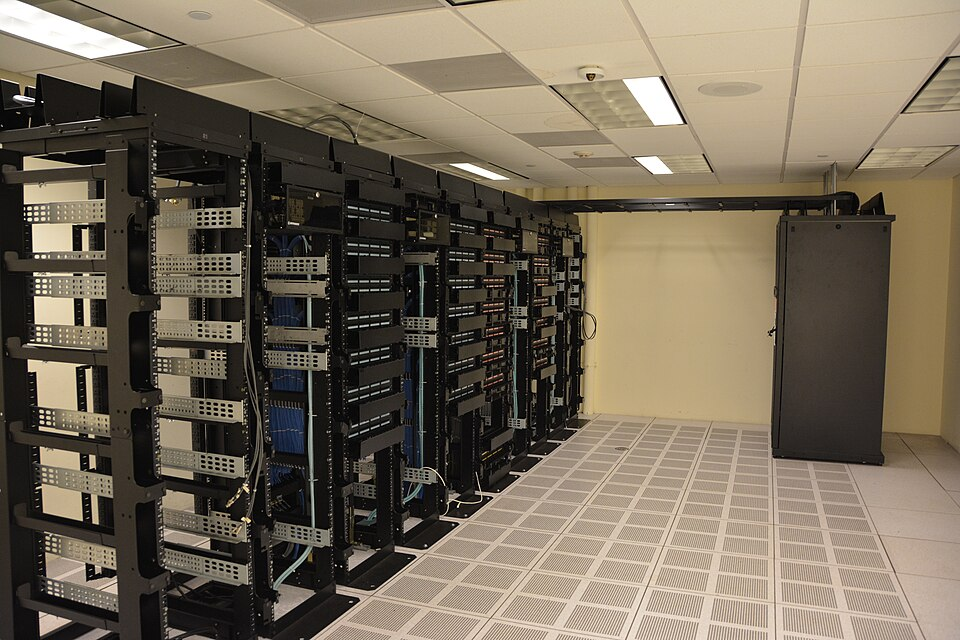
The infrastructure cycle already under construction is enormous.
.jpg)
Microsoft said in its latest fiscal-year earnings call that it added another gigawatt of capacity in the quarter and remains on track to roughly double overall capacity in two years.
The company also said its calendar-year 2026 CapEx investment expectations remained unchanged after adjusting for changes in lease accounting, at roughly $175 billion. Microsoft continues to deploy next-generation infrastructure from NVIDIA and AMD while expanding its own Maia silicon platform.
Meta has similarly been increasing—not reducing—its infrastructure plans.
Earlier this year it raised its 2026 CapEx range to $125–145 billion, partly because of higher infrastructure requirements.
And in July Meta and BlackRock announced a new 1GW data center campus in El Paso. The project involves roughly $14 billion of development costs for buildings, power, cooling and connectivity infrastructure and is expected to begin bringing capacity online in 2028.
Oracle may be the clearest near-term datapoint.
On September 10—only days before the current AI safety debate intensified—Oracle reported that demand for AI cloud training and inference services continued to grow faster than supply.
Its Remaining Performance Obligations reached $664 billion.
Oracle booked more than $30 billion of additional AI cloud contracts during the quarter, delivered more than 300,000 GPUs, and added 850MW of data center capacity.
That is not what a collapsing infrastructure cycle looks like.
At least not yet.
7. What Would Actually Make Me Bearish?
For me, there are three signals that would materially change the thesis.
1. Explicit Restrictions on Training Compute
If leading laboratories or governments begin setting hard limits on the amount of compute that can be used in frontier training runs, the impact would be direct.
At that point the market would need to revisit assumptions for:
GPU demand,
HBM,
advanced packaging,
scale-out networking,
optical components,
and eventually power infrastructure.
This would be a genuine fundamental event.
2. Hyperscalers Cut CapEx Guidance
This is the most important signal.
Comments about safety can compress valuation multiples.
But Microsoft, Google, Meta, Amazon and Oracle reducing data-center procurement would affect earnings.
The key phrases to watch would be things such as:
“slower GPU procurement,”
“delayed data center deployment,”
“lower training requirements,”
or
“capacity plans revised downward.”
We have not seen that yet.
The latest observable corporate behavior still points in the opposite direction.
3. Order Cancellations Move Down the Supply Chain
The final confirmation would come from suppliers.
GPU vendors.
HBM manufacturers.
Optical-component makers.
Power-equipment companies.
Cooling suppliers.
If management teams start reporting postponed deliveries or customer cancellations, pacing has moved from the policy layer into the physical infrastructure cycle.
Until then, the distinction between headline risk and fundamental deterioration remains important.
8. The Counterintuitive Interpretation
There is also an unusual aspect to this entire debate.
The AI industry is not asking to slow down because the technology stopped improving.
It is discussing slowing down because executives believe capabilities may be improving too quickly.
That matters.
A slowdown caused by weak demand would be deeply bearish.
A slowdown caused by unexpectedly rapid capability improvements is different.
It may reduce the slope of frontier compute growth, but at the same time it provides evidence that the underlying technology continues to advance extremely quickly.
In other words:
Demand-driven slowdown = bearish on AI itself.
Safety-driven pacing = potentially bearish on the speed of infrastructure growth, but not necessarily on the long-term economic value of AI.
Those two scenarios should not receive the same valuation framework.
9. My Investment View
The weekend development deserves attention.
The fact that Amodei, Altman, Musk and Hassabis are converging around some version of frontier pacing creates a new risk that AI infrastructure investors did not have to price as seriously six months ago.
I would therefore separate the risk into two categories.
Short-term market risk: 7/10
The narrative is simple enough for markets to trade:
AI development slows
→ training demand slows
→ AI CapEx expectations fall.
High-duration AI infrastructure stocks could be particularly sensitive to that narrative.
But:
Long-term AI infrastructure thesis damage: 3/10 — for now.
There has been no meaningful evidence yet that hyperscalers are cancelling physical infrastructure plans.
Microsoft continues to build.
Meta continues to build.
Oracle says demand still exceeds supply.
And inference demand continues expanding independently of how frequently a new frontier model is trained.
The more interesting question is therefore not:
“Are AI companies slowing down?”
It is:
“Which part of AI are they slowing down?”
If they slow frontier capability jumps while inference, enterprise adoption and physical infrastructure deployment continue to expand, the AI investment cycle changes shape—but does not necessarily end.
If, however, pacing evolves into explicit compute caps and hyperscaler CapEx reductions, the conclusion changes immediately.
For AI infrastructure investors, that is now the signal to watch.
The debate has moved from whether AI will become powerful enough to justify the infrastructure build-out—to whether it may become powerful enough that the industry voluntarily limits how quickly the next generation is created.
That is a very different kind of risk.
And possibly the most important new variable in the AI trade.
Disclaimer
This article is provided for informational and educational purposes only and reflects the author’s personal views as of the date of publication. It does not constitute investment advice, investment research, a solicitation, or a recommendation to buy or sell any security or financial instrument.
The information contained herein has been obtained from sources believed to be reliable, including company disclosures, corporate materials, industry research and publicly available information, but its accuracy or completeness is not guaranteed. Certain statements in this article—including estimates or interpretations regarding AI safety, frontier-model development, training compute, inference demand, hyperscaler capital expenditure, data-center buildout and potential market impacts—are estimates, interpretations or forward-looking scenarios rather than confirmed future results.
Investments in individual equities involve substantial risk, including the possible loss of principal. Semiconductor, AI infrastructure, networking, data-center and power-related companies may be exposed to technology risk, customer concentration, competitive pressure, capital intensity, supply constraints, regulatory changes, policy risk, execution risk and significant share-price volatility.
The author may hold, initiate, increase, reduce or exit positions in securities discussed in this article without notice. Readers should conduct their own research and consult an appropriately licensed financial professional before making investment decisions. Past performance is not indicative of future results.